
PROPERTIES
Effective conservation relies on knowledge of mortar’s materiality. This section goes over the composition of mortars, renders, and plasters. It delves into the elements of each material, their reactions, and how each possesses distinct properties. These different properties will help to determine their compatibility with historic masonry.
Historic and contemporary mortars consist of three main components: binders, aggregates, and pozzolans. Historic binders include subsoils and lime. Lime mortars are best for their porosity and strength, and should typically be weaker than the bricks they surround. The process by which limestone, or Calcium Carbonate (CaCO3), is conditioned for use in mortars is called the Lime Cycle, which depicts its transformation into quicklime, slaked lime, and then back into limestone through carbonation. Limestone burned, or calcined, at temperatures between 900º and 1200º C, releases water and carbon dioxide, converting it into quicklime, which is reactive with water. When water is added to the quicklime, it becomes slacked lime, which can be used in three forms: lime putty, lime putty- aggregate mix, and powdered lime. Depending on the lime’s clay content (silica and alumina) and the temperature at which it is heated and how it is treated when it is slacked, the lime cycle can produce several different binders: non-hydraulic lime, hydraulic lime, and cement. Each binder possesses its own properties and strengths.
Non-Hydraulic Lime
The softest binder is non-hydraulic lime. Made from lime consisting of up to 6% impurities. Non-hydraulic lime does not harden with water; it hardens in contact with air. In the lime cycle, non-hydraulic lime is in the form of lime putty or “coarse stuff”, which is a lime putty and aggregate mix. The longer lime putty is slaked, the more desirable it will be to work. To make a mortar, aggregate is blended while the lime is slaked. In contact with air, it carbonates, where a reaction of carbon dioxide converts calcium hydroxide Ca(OH)3, into calcium carbonate (its original state of limestone, CaCO3).
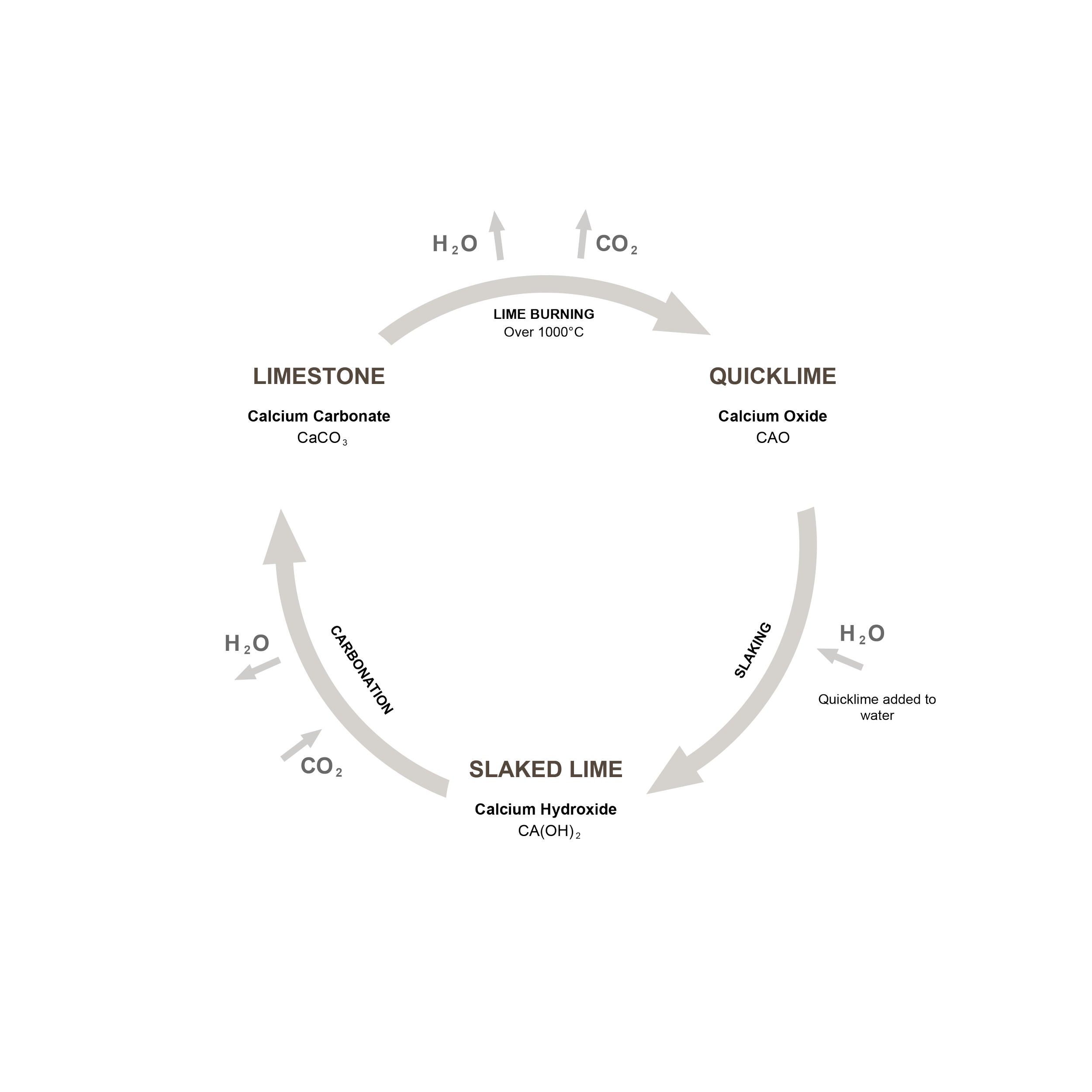
Non-Hydraulic Lime Cycle
Hydraulic Lime
In the middle is hydraulic lime. Made from limes consisting of 12% - 25% impurities. Hydraulic lime sets in contact with water or even submerged in water, and because of its hydraulic properties, sets quicker and is stronger than non-hydraulic limes. The lime cycle differs from non-hydraulic limes; instead, calcining the lime at a higher temperature of 1200º C. Quicklime is slaked differently for hydraulic limes, as the amount of water is much more controlled to only slake the calcium oxide to form calcium hydroxide. This hydrated mixture is then dried and ground to powder, creating hydraulic lime. This is where aggregates would be blended with the lime to make mortars, renders, or grouts. When water is added, the calcium silicates in the lime hydrate and begin to carbonate, and the water then evaporates. This process is
Hydraulic limes exist in two types: Artificial Hydraulic Limes (AHL) and Natural Hydraulic Limes (NHL). AHLs possess pozzolans or other hydraulic materials incorporated into the lime, while NHLs are made from natural deposits of lime. In 1818, engineer Louis Joseph Vicat published his research on the strength of NHLs, classifying them as “feebly hydraulic”, “moderately hydraulic”, and “eminently hydraulic”. While not used today, he set up the standardization of NHLs that exist now, as contemporary NHLs are much stronger and less porous than their early counterparts. Based on European Standards, NHLs are classified into 3 categories on hydraulicity based on compressive strength at 28 days: NHL 2, NHL 3.5, and NHL 5. The higher the number, the stronger and less porous the NHL.
Cements
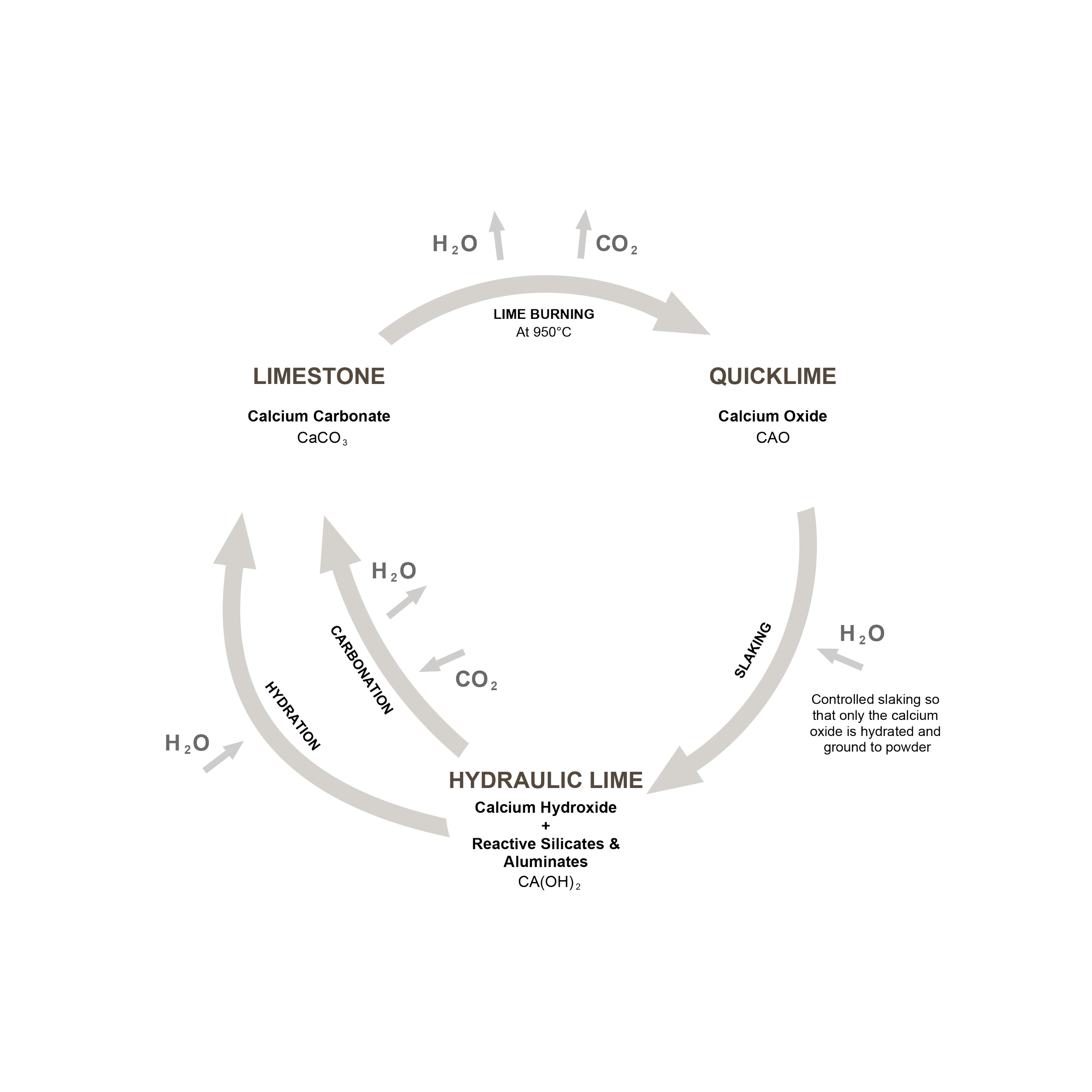
Natural Hydraulic Lime Cycle
The strongest of the binders is cement, which may be made from naturally occurring lime containing more than 25% calcium carbonate, or be an artificial mixture of lime and additives. Differing from the other binders, Cement is calcined at a temperature of 1400º C or more (1200º C for Natural Cements). For cement, there is no slaking process, as the product of calcination contains no free lime and is ready to be mixed with water. When water is added, it hydrates the silicates and aluminates, setting the cement. Depending on its additives, cements may vary in properties. The most common type is Portland cement, which contains a large quantity of alite, a reaction product of calcium oxide and silica formed by heating lime at temperatures above 1260⁰C. Alite is the property that characterises Portland cement’s quick set time and strength. While all cements excel in their properties of strength, they lack elasticity, their ability to expand and contract. This makes them inappropriate for use in mortars, especially on historic buildings in which bricks are fired with weaker clays.
Gypsum
A mortar’s performance and appearance are a large part dependent on its aggregate. The most common is sand, though historical aggregates have used sands, crushed stones, ash, seashells, and other materials. In a mortar mix, the aggregate is the filler while the binder coheres the individual pieces or grains together. The size, shape, and color of aggregates can determine characteristics of a mortar like texture, color, and strength. Sand’s size, shape, and grading dictate the porosity and permeability of a mortar; these factors also influence the mortar's texture. All sands should be washed to avoid introducing unnecessary salts or any harmful materials to the mortar mixture.
There are three kinds of sands:
Pit Sands will be the most angular and sharp, which allows the grains to interlock, in turn, making the mixture stronger and best for structural work
River or Lake Sands are more rounded and sub-angular, making them not ideal for structural mixes. Rounded sands produce a smoother mix, so they are preferred for renders or plasters to create a smoother surface. These sands will typically be cleaner.
Sea Sands have rounded grains and more variation due to erosion. The high amount of salt present in these sands makes them inappropriate for use without washing. Salt in the aggregate will cause absorption of water, which will deteriorate the mortar and masonry.
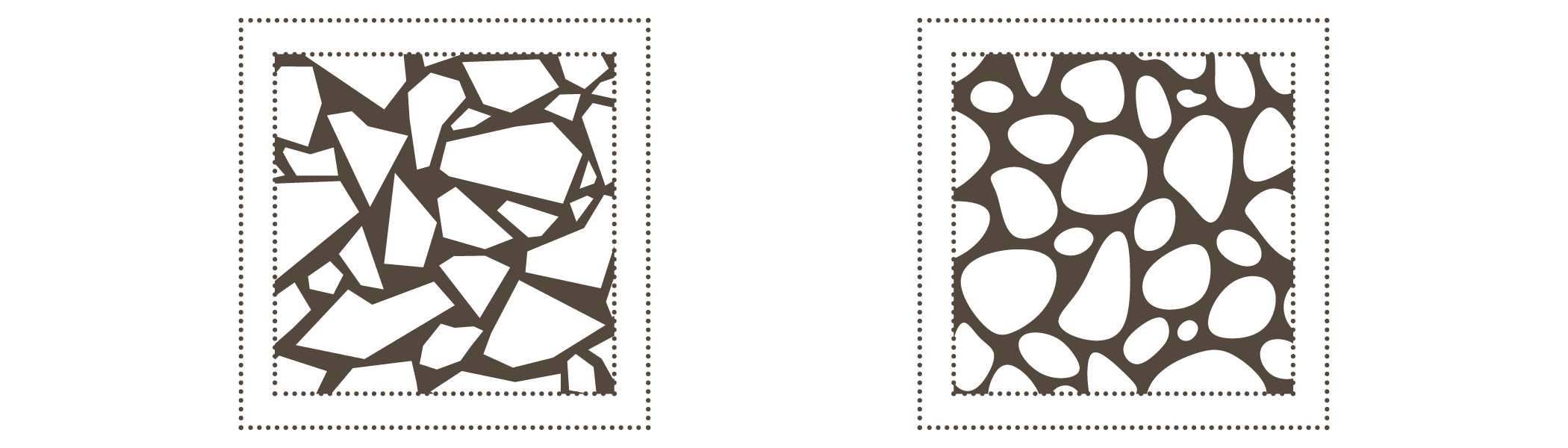
Angular Aggregate
Rounded Aggregate
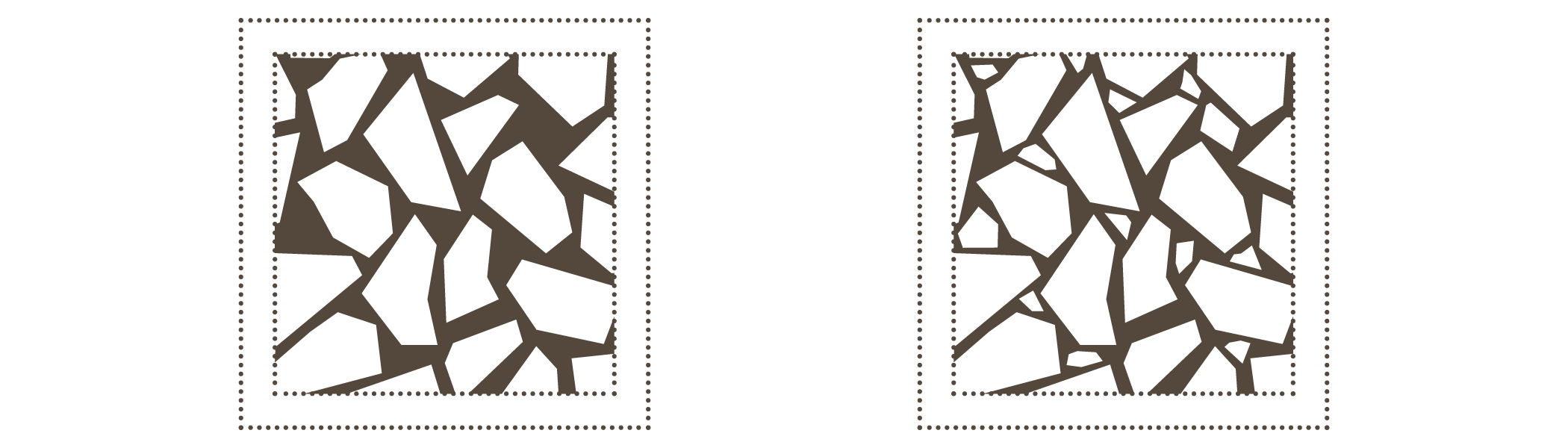
Well-Sorted Aggregate
Well-Graded Aggregate
Depending on the application of the mixture (mortars or each layer of a render), different-sized and sorted aggregates are necessary. The ASTM standardizes the size of grains into two categories: fine, grains ranging from 0.15mm to 0.475mm, and coarse, grains ranging from 0.475mm to 19mm. For masonry work, fine aggregates will most always be used, as with larger grains, the mixture will have less adhesion. Within the use of fine aggregates, sorting of the sizes may affect the properties of the mixture. Ideally, a well-graded aggregate is one with different-sized particles, so that voids are filled within the mixture and a stronger. With this knowledge, there may be an understanding of how to manipulate a mixture dependent on its use. For a mortar, a sharp, angular, well-graded aggregate is most appropriate. For pointing, this may change, and a finer-grained, more lime-rich mixture may be used.
Pozzolans are materials that contain silica and alumina that may cause a reaction with lime and water to form calcium silicate hydrates and calcium aluminate hydrates. When added to a lime mixture, this increases hydraulicity - making the lime cure quicker. Pozzolans are created by heating silica and alumina, so they may be created like brick dust, or may be naturally made like volcanic ash.
Gypsum is a crystalline mineral occurring in deposits where water was once present. It is made up of calcium sulphate dihydrate (CaSO4·2H2O), and when heated at temperatures between 150º C and 160º C, some of the water is lost, and it becomes calcium sulphate hemihydrate CaSO4·0.5H2O, commonly known as Plaster of Paris, which is commonly used for plastering interiors and ornaments when water is added. If Plaster of Paris is heated further (or when gypsum is originally hard burned), the water is entirely driven off, forming Calcium sulphate (CaSO4) or Anhydrous Plaster, which possesses a slow set when water is added. Due to its slight solubility in water, its application is preferably for interiors, as it is historically used as a plaster.
Aggregate
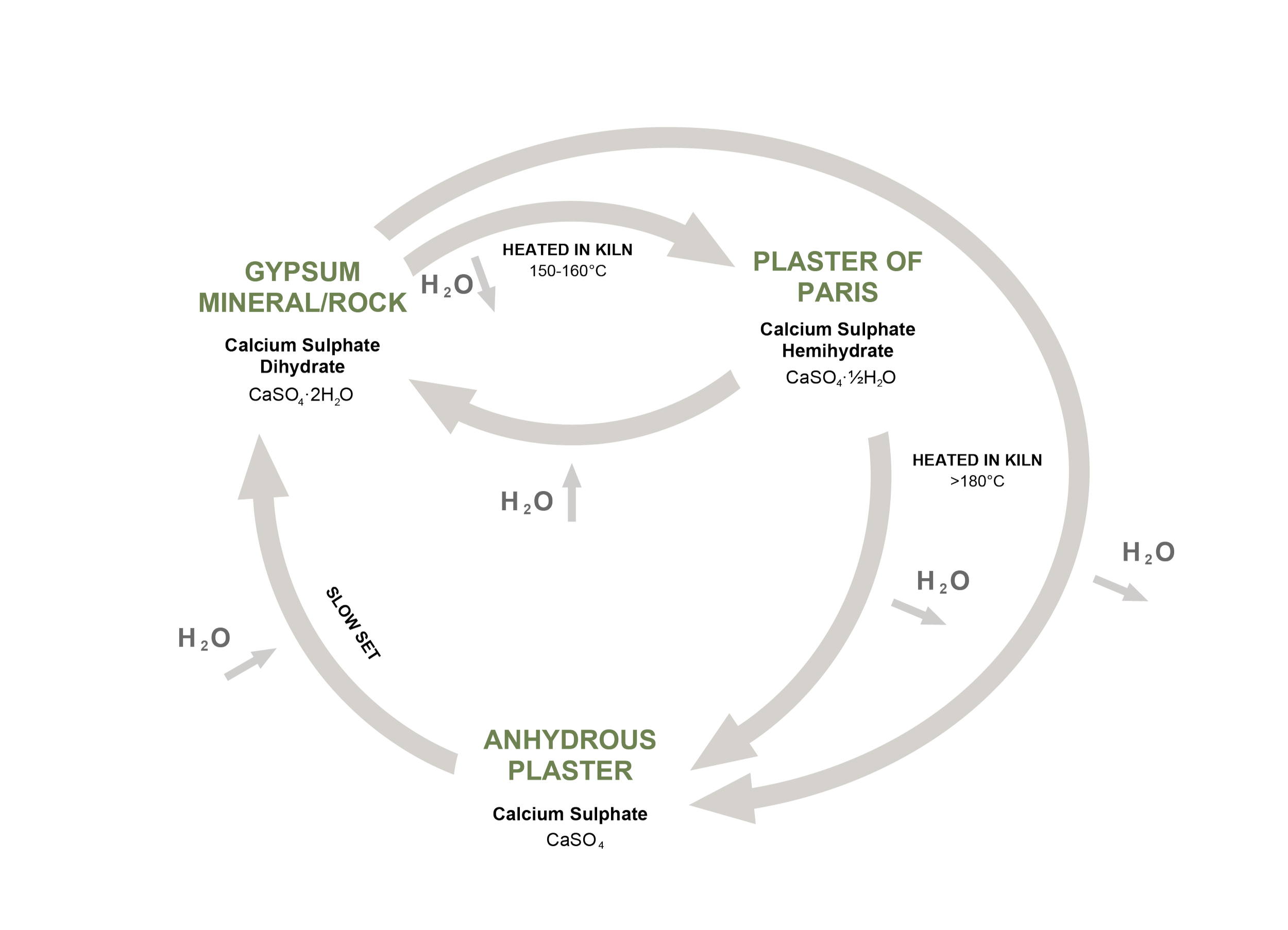
Gypsum cycle
Mortar Properties
A mortar’s strength depends on multiple factors, including the type of binder used and the grade of aggregate used in a mixture. As a general rule, the stronger the compressive strength, the more impermeable and brittle it will be, directly correlating to the amount of clay present in the lime. The three parameters relating to strength are: compressive strength, flexural strength, and plasticity
Compressive Strength - the mortar's ability to be crushed
Flexural Strength - the mortar's ability to bend (directly correlated to compressive strength).
Plasticity - the mortar’s ability to respond to stress (inversely correlated to compressive strength).
With a higher clay content and increased firing temperature, the compressive strengths of mortars increase while their plasticity decreases. This can be seen in cementitious mortars, which as theyre their strength increases, they become more brittle.
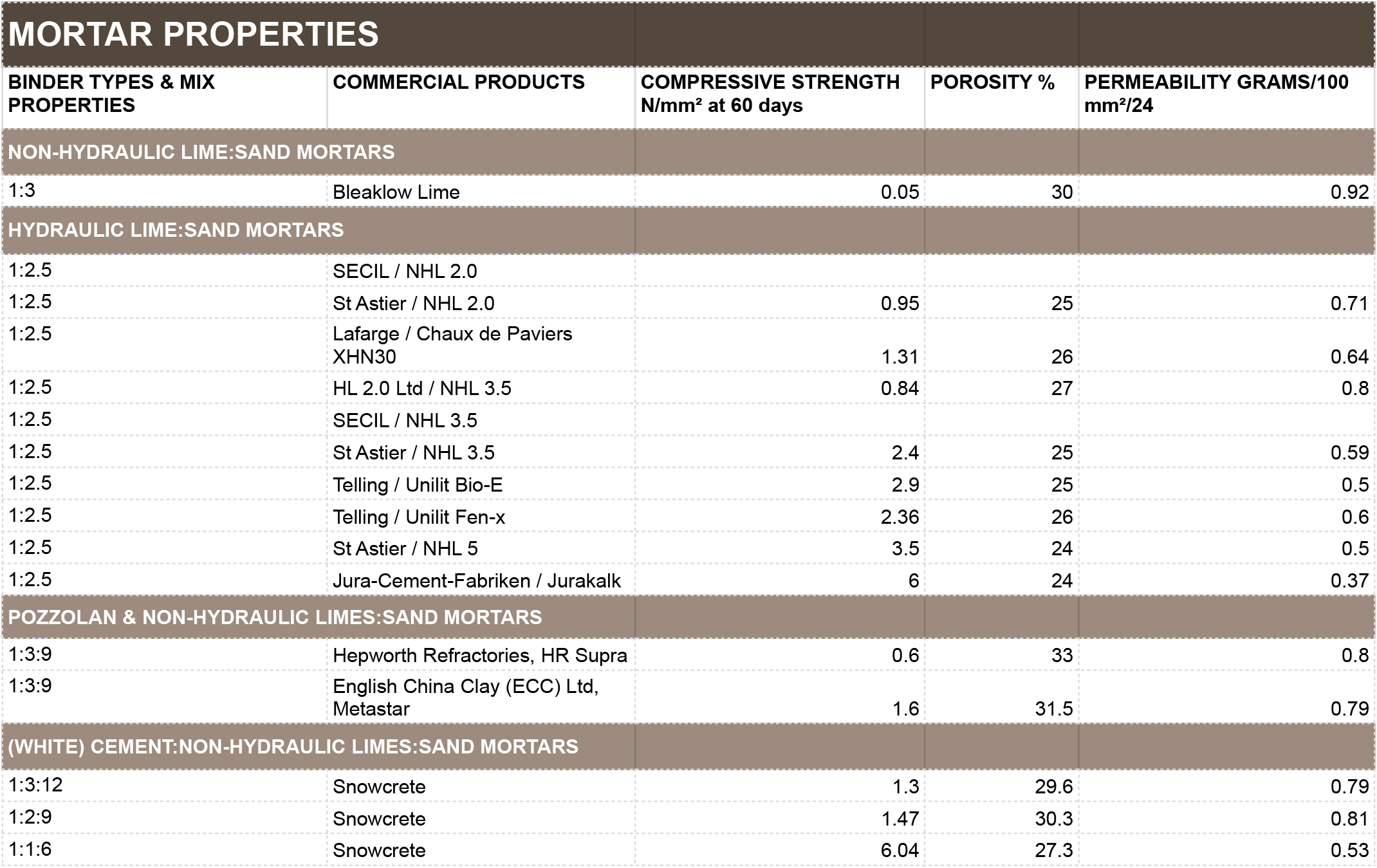
Source: Adapted from Alison Henry and John Stewart, Practical Building Conservation: Mortars, Renders & Plasters (2012), p. 240.
Another property of mortars is their porosity and permeability. Though they are similar, a mortar may have a high porosity and low permeability. Porosity is the proportion of voids to solids within a material, while permeability refers to the ability of those voids to transmit fluids. Mortars used for conservation must have higher permeability and porosity than their masonry so that moisture can escape through the mortar without damaging the host material. This is best achieved with a well-graded, sharp aggregate. Having a large pour size is also beneficial as frozen water trapped within pours will have space to expand.
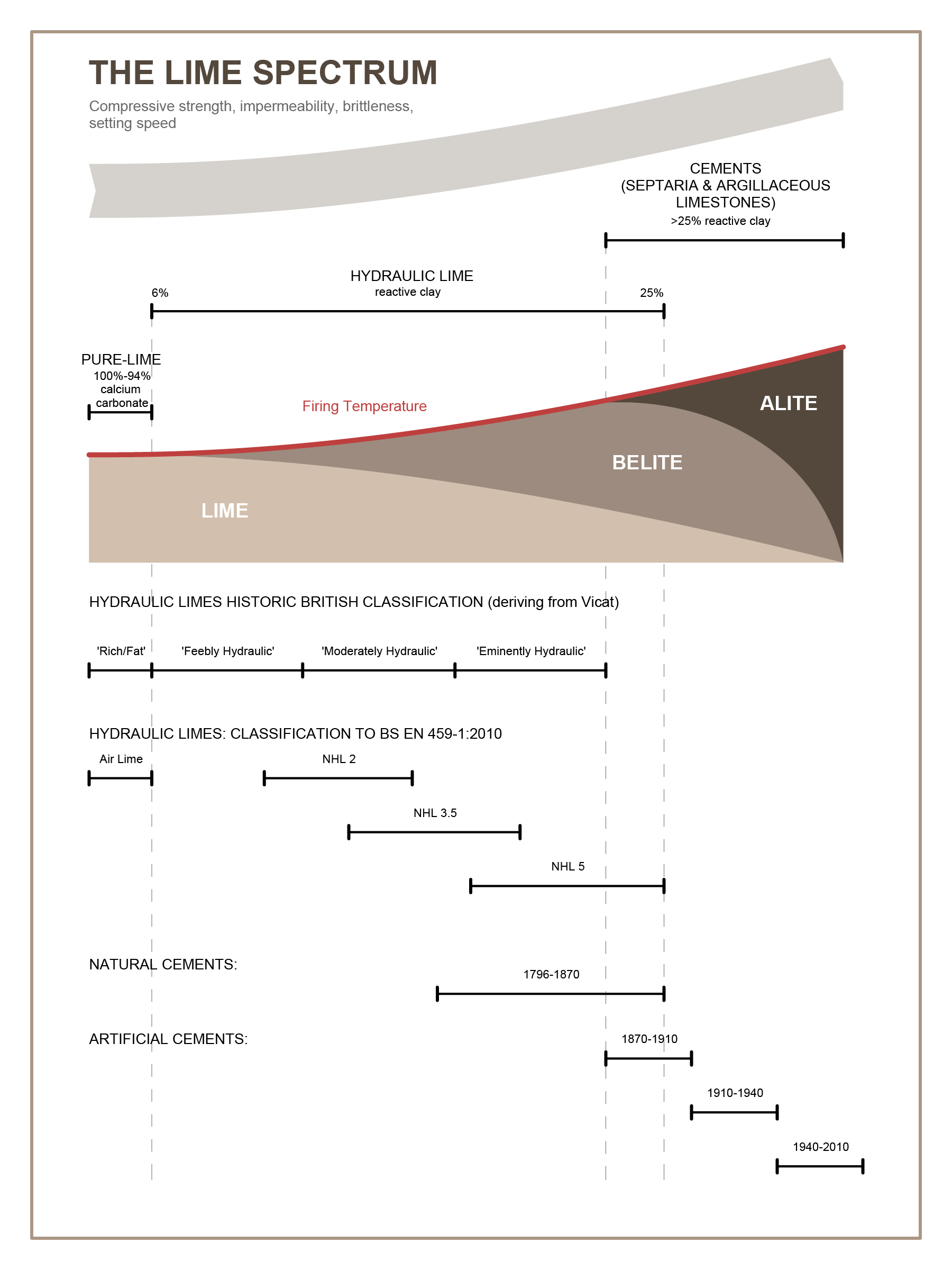
Source: Redrawn and adapted from Alison Henry and John Stewart, Practical Building Conservation: Mortars, Renders & Plasters (2012), p. 249.